Enter password to view case study
← Back home
Designing a Better First Impression: Improving SmartNews’ Onboarding Experience
Overview
To tackle low onboarding completion rates, I redesigned SmartNews’ first-time user experience to reduce complexity and focus on user intent. This change helped new users find relevant news faster and increased participation by over 20%.
My Role
Product Designer (UI/UX)
Timeline
Aug - Oct 2025 (3 months)

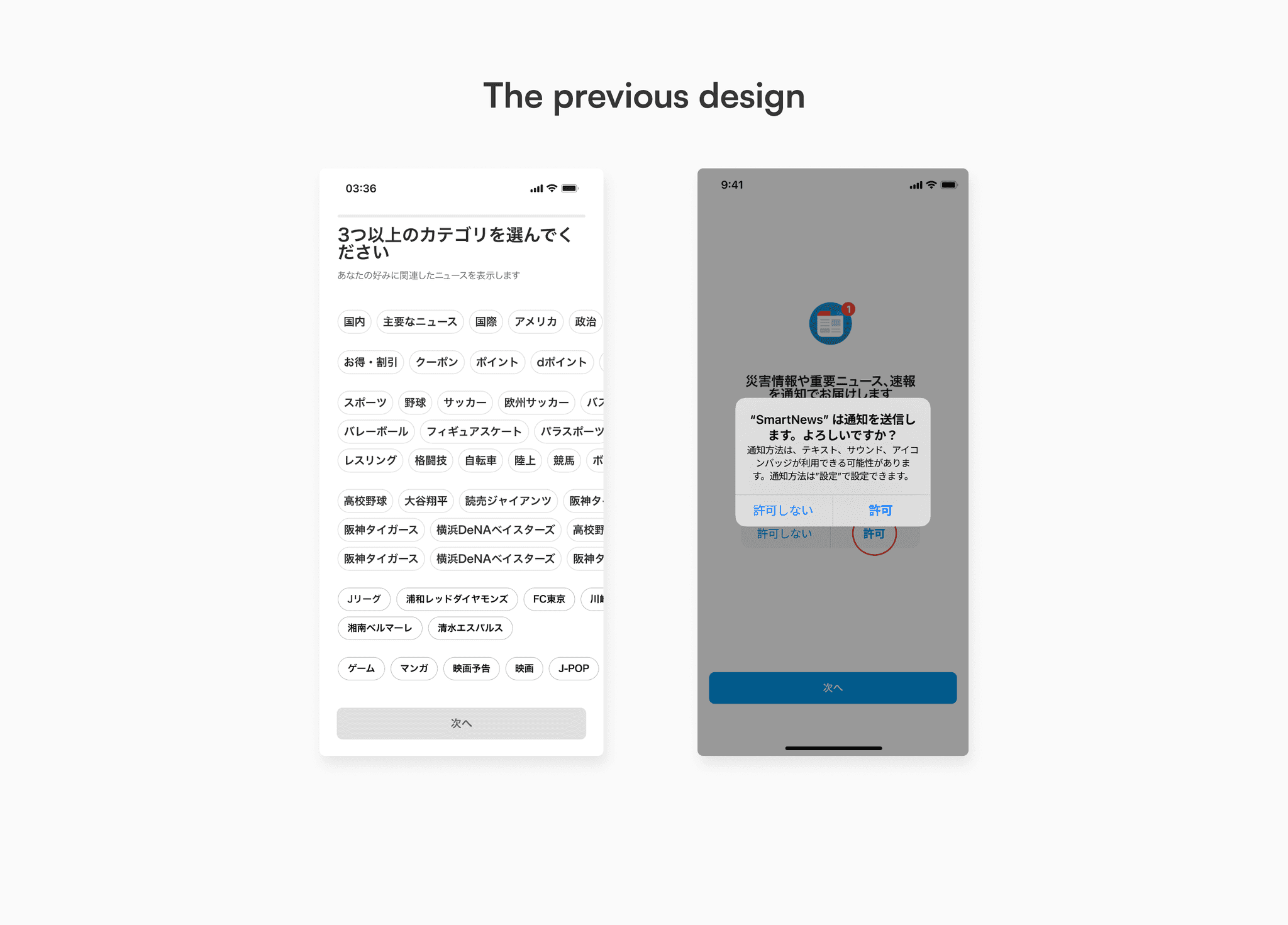
Since 2022, SmartNews has been collecting user interests to personalize the first-time user experience. However, data showed that only 37.9% of new users completed the onboarding process to set their interests — most skipped it entirely.
We believed improving this step could help users discover more relevant news early on and increase overall engagement.
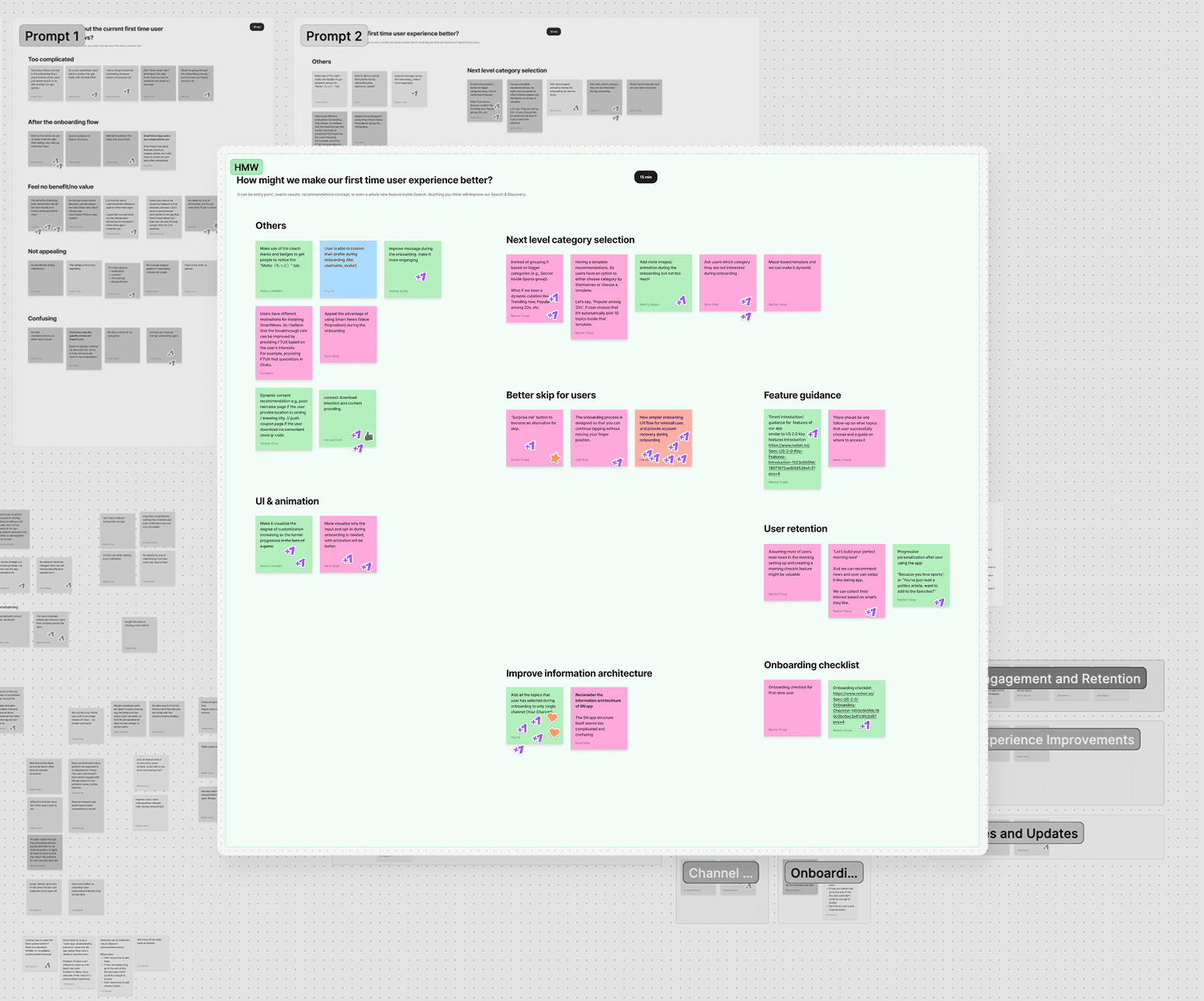
We conducted online brainstorming sessions and interviews with five users. Among several insights, three key issues clearly stood out for both users and the business:
Too many categories — New users often don’t know what they want to read yet, but SmartNews presents hundreds of categories at once, creating decision fatigue.
Unclear value — The benefits of choosing categories or enabling notifications aren’t clearly communicated, so users don’t see the purpose.
Confusing structure — The large number of categories, unclear grouping, and lack of guidance make the onboarding process complicated and hard to complete.
User problem:
New users feel overwhelmed by too many categories and unclear guidance during onboarding, making it hard to understand what to choose or why it matters.
Business problem:
The unclear and overwhelming onboarding flow leads to low engagement and personalization setup rates, limiting SmartNews’s ability to retain new users and deliver relevant content early on.

After we unearthed useful insights through usage data, inventory analysis, and user research, as a team, we gather and do a brainstorming ideas together to discover possible solution to solve the problems
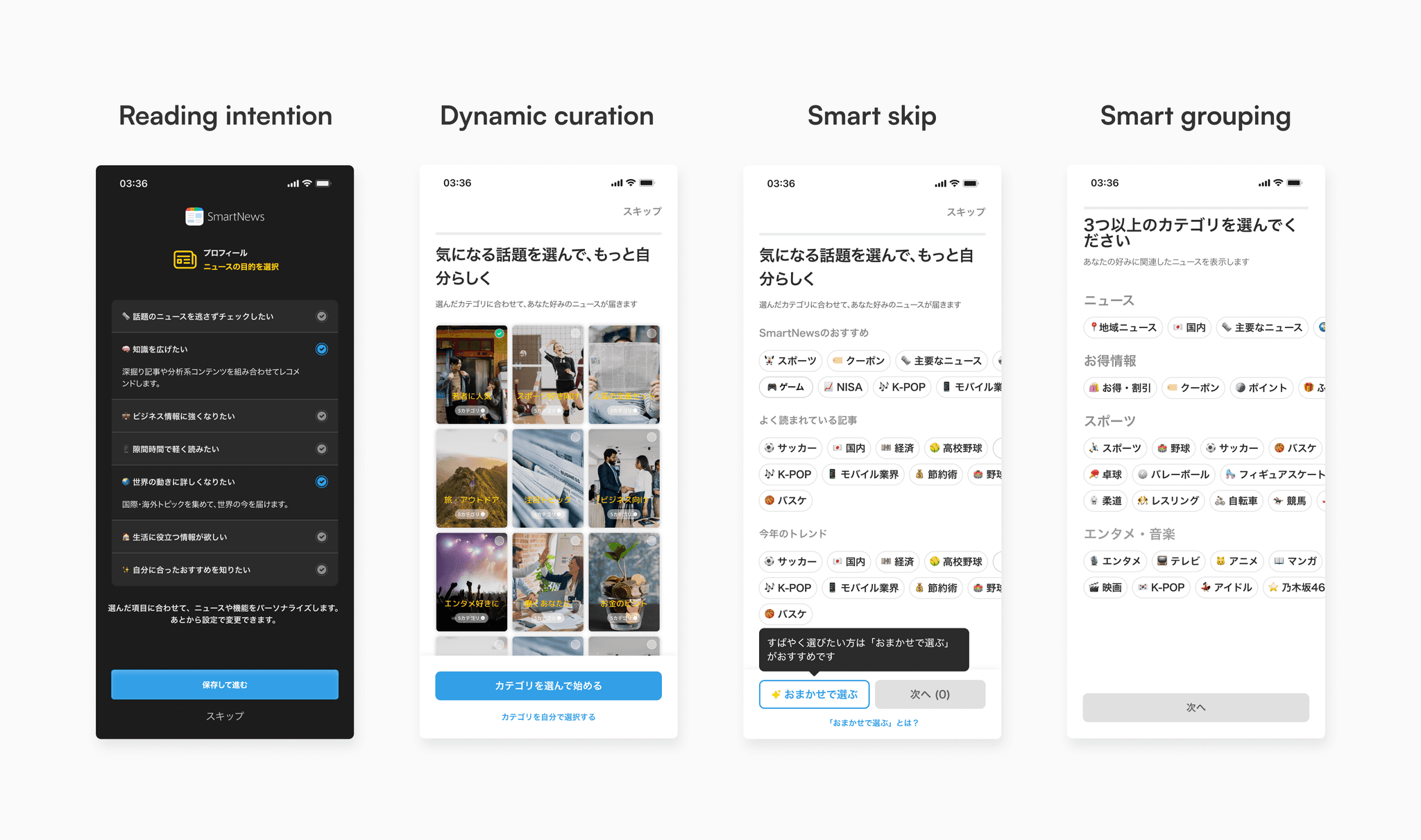
And based on that, we leaning towards these 3 solutions that we think it can solve the main problems for both users and business.
Reading intention — Let users choose their news intention, and the app curates the rest.
Dynamic curation — Group categories dynamically based on related topics.
Smart skip — Automatically select relevant categories based on demographics and trends.
Smart grouping — Reorganize existing categories into clearer topic clusters.
After discussing pros and cons of each, we decided to move forward with the Reading Intention concept as it addressed both user and business pain points most effectively.

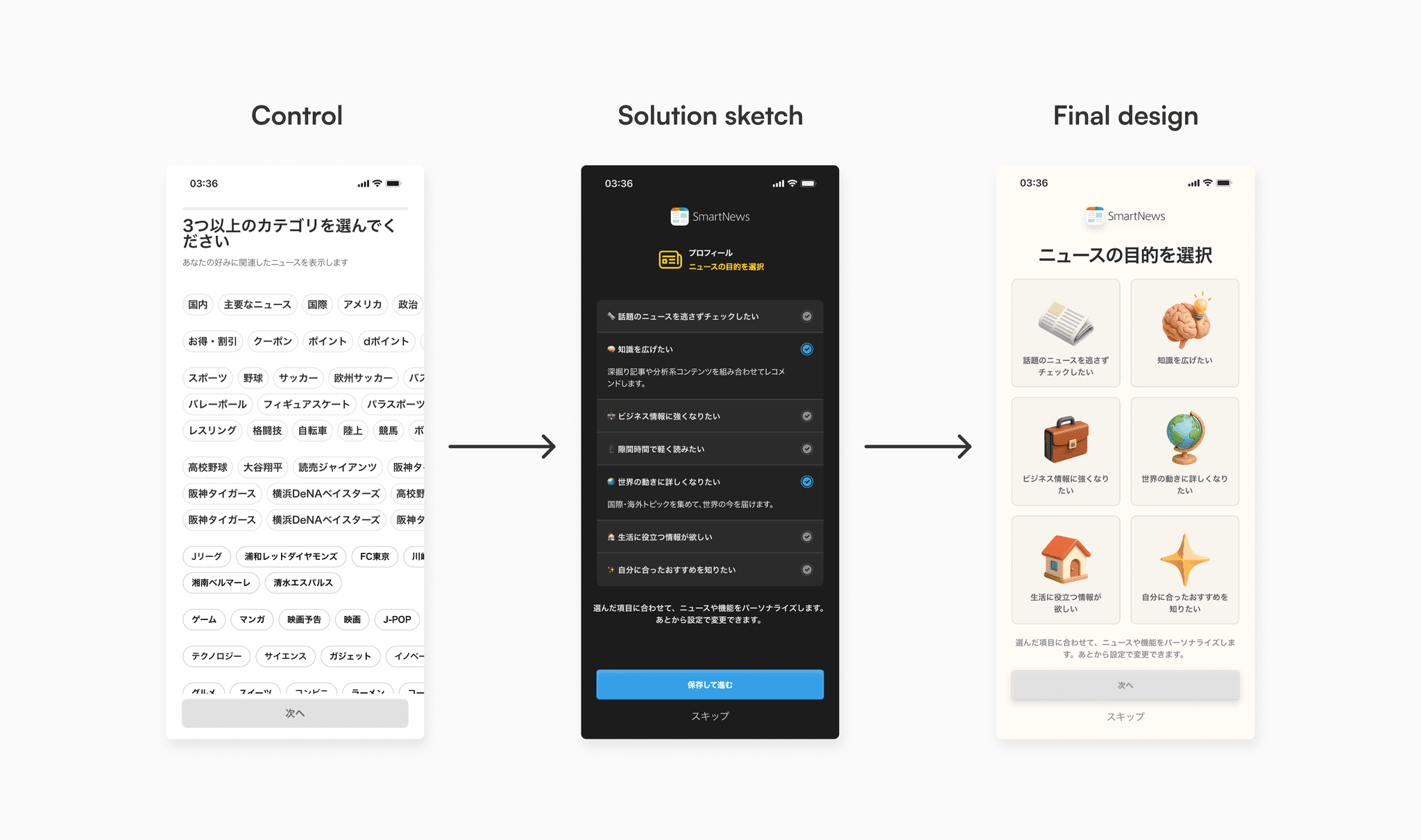
The Reading Intention replaces the complex category list with simple intent-based choices like “Stay updated with current events” or “Discover new lifestyle ideas.”
Simplified the process — Reduced the steps from hundreds of categories to a few meaningful choices, speeding up completion.
Avoiding decision fatigue — Framed onboarding around user goals instead of detailed topics.
Kept flexibility — Users can later refine their preferences in their profile, keeping a sense of control.
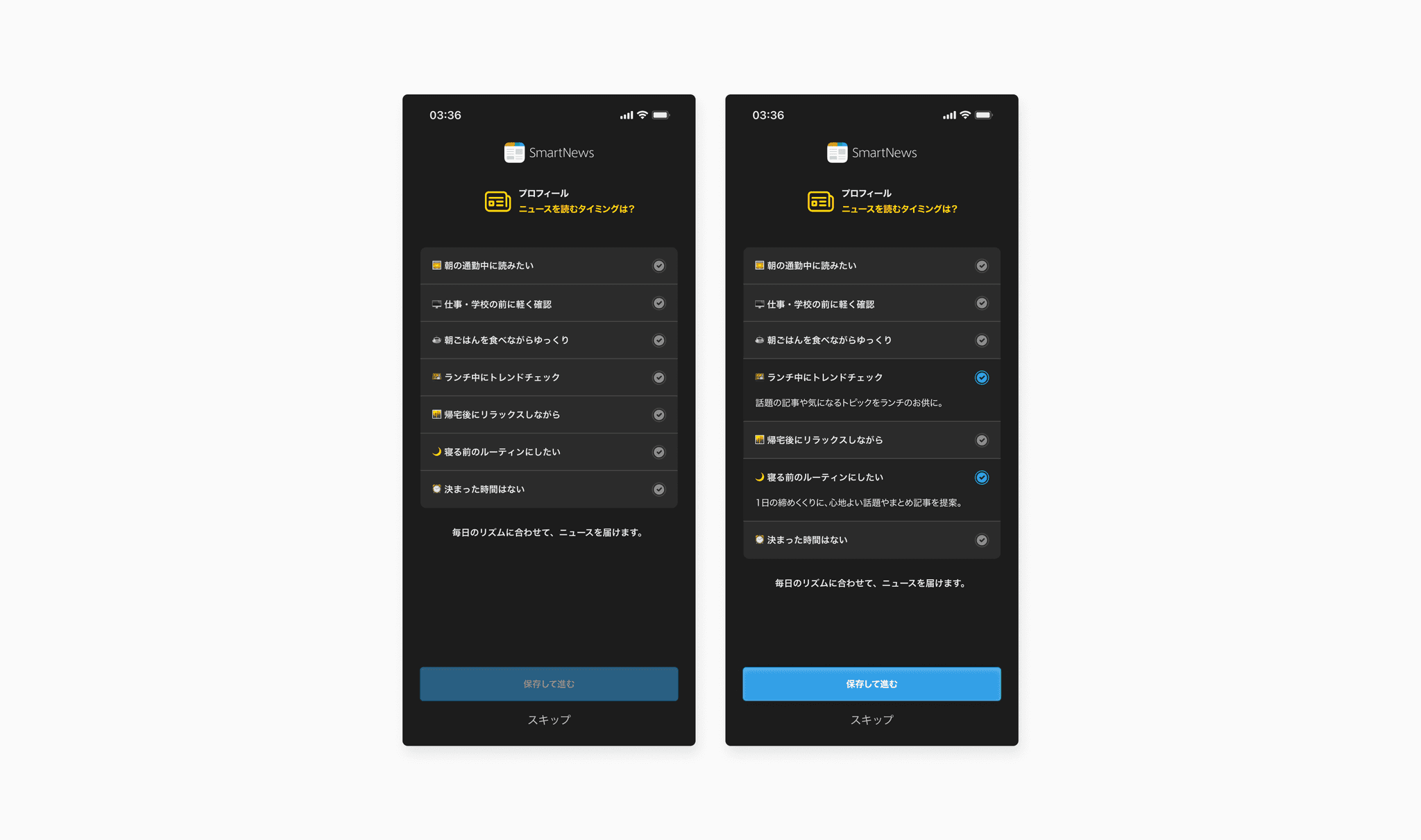
Optional welcome page exploration
I also explored an opening intro to the app to give more delightful experience to the users as well as giving a good impression to them from the first time.

We did the first test to 10% of a new users and these are the results.
Impact & Achievements:
📈 Onboarding participation increased from 37.9% to 58.2% after the redesign.
💡 Better content delivery — Improved personalization helped SmartNews distribute relevant news earlier in the user journey.
🌎 Higher engagement — Daily Active Users (DAU) among new users rose by 5% in the first month after launch.